
European Commission wishes to reform emissions trading – changes for maritime transport and aviation
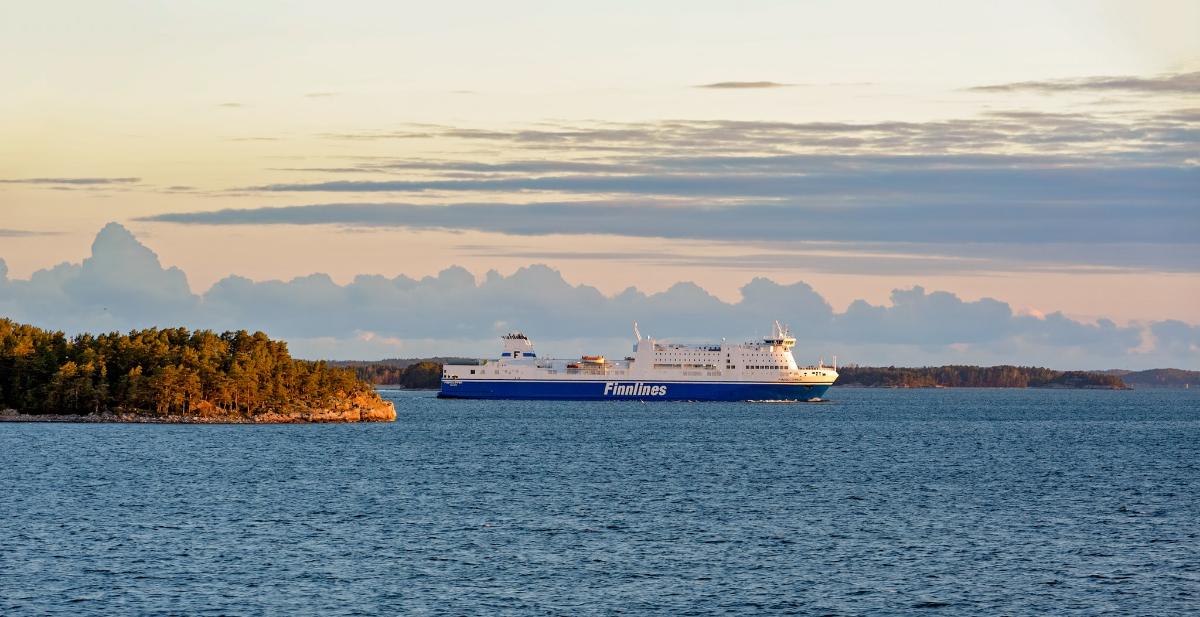
On 17 July 2026, the European Commission gave a proposal to amend the EU Emissions Trading Directive. According to the proposal, the scope of emissions trading in both aviation and maritime transport would expand. The reform is based on the EU’s decision on the 2040 climate target. The EU ‘s net emissions will be reduced by 90 per cent by 2040, compared to 1990.
For Finland, it is important that smooth operation of maritime transport and flights and foreign trade are taken into account.
“International transport is crucial for Finland’s foreign trade, accessibility and security of supply. This is why it is important to draw special attention to the impacts of emissions trading on maritime transport and aviation and take good care of our competitiveness,” Minister of Transport and Communications Lulu Ranne says.
Emissions trading in maritime transport to be extended to smaller ships
Maritime transport has been covered by the emissions trading system since 2024. At present emissions trading in maritime transport concerns commercial transport of cargo and passengers with ships of 5 000 GT (gross tonnage) and above. According to the directive in force, from 1 January 2027 it will be extended to offshore ships of 5 000 GT (gross tonnage) and above. By the new proposal, the Commission would extend emissions trading to smaller ships. The extension would concern numerous vessel types in size classe below 5 000 gross tonnage but not below 400 gross tonnage.
The Commission proposes that free allowances would be introduced for maritime transport. The aim is to reduce the use of fossil fuels. Free emission allowances would be allocated to shipping companies against the use of renewable fuels, electricity or wind propulsion. There would be a cap on the total number of allowances.
The Commission’s proposal also includes amendments to prevent the avoidance of emissions trading, reduce administrative burden and take into account possible future actions of the International Maritime Organization IMO. The Commission proposes that the island exemption would be continued. The exemption is also applied by Finland, where it concerns passenger transport between Mainland Finland and Åland.
Proposal takes winter navigation into account
The special circumstances of winter navigation have been taken into account in the proposal. The present adjustment for ice-class ships is proposed to continue until 2035. At present the adjustment takes into account the additional burden caused by the ice strengthening of ships of ice classes IA and IA Super in emissions trading.
“The fact that winter navigation has been taken into account can be considered as a gesture of support for Finland. The work continues, and in the negotiations we will aim for an adjustment that would even better cover the additional burden caused by winter navigation to Finland’s foreign trade,” Minister Ranne says.
Geographical scope of emissions trading in aviation to expand
For aviation, the Commission proposes that the geographical scope of emissions trading would be expanded. Emissions trading was extended to aviation in 2012, and since 2013 it has been applied to flights within the EEA. The Commission proposes that from 2029 onwards emissions trading would be extended to part of the flights departing to third countries. Emissions trading would apply to flights to airports at a distance of less than 5,000 kilometres from Frankfurt. This means that flights to China or the United States, for example, would not be covered by emissions trading. The Commission also proposes amendments to the application of the Carbon Offsetting and Reduction Scheme for International Aviation CORSIA.
Limited numbers of free allowances allocated against the use of renewable fuel have already been applicable in aviation. Now the Commission proposes that the mechanism would be continued and its scope expanded.
Read more about the Commission’s proposal in the press release of the Ministry of the Environment and Ministry of Economic Affairs and Employment.
What’s next?
The Ministry of Transport and Communications, together with other ministries, will examine the Commission's proposal and inform Parliament about it in October. Stakeholder consultations will be organised when Finland’s position on the proposal is being formed
Inquiries:
Marjo Lindgren, State Secretary, tel. +358 295 342 119, [email protected]
Niina Honkasalo, Ministerial Adviser, tel. +358 50 302 8123, [email protected]
Press release of the Ministry of the Environment and Ministry of Economic Affairs and Employment 17 July 2026


